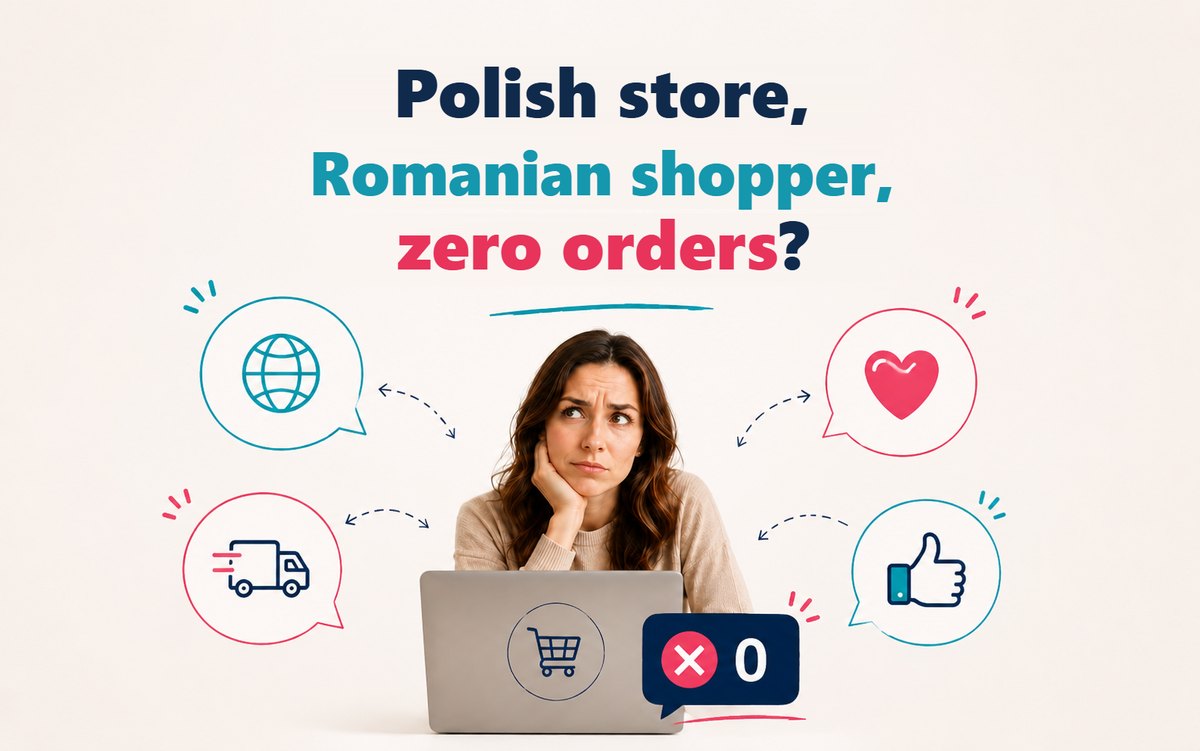
Polish store, Romanian shopper, zero orders? Here’s where the problem usually is
Many Polish sellers think an online store for Romania can be built quickly: translation, payments, delivery, campaigns, done. The problem is that Romanian shoppers have different buying habits, different expectations and a different sensitivity to the shopping experience than shoppers in Poland. That’s why a store can look fine “on paper” and still not sell. Most often it isn’t the product that fails. It’s the way the store was prepared for the local market.
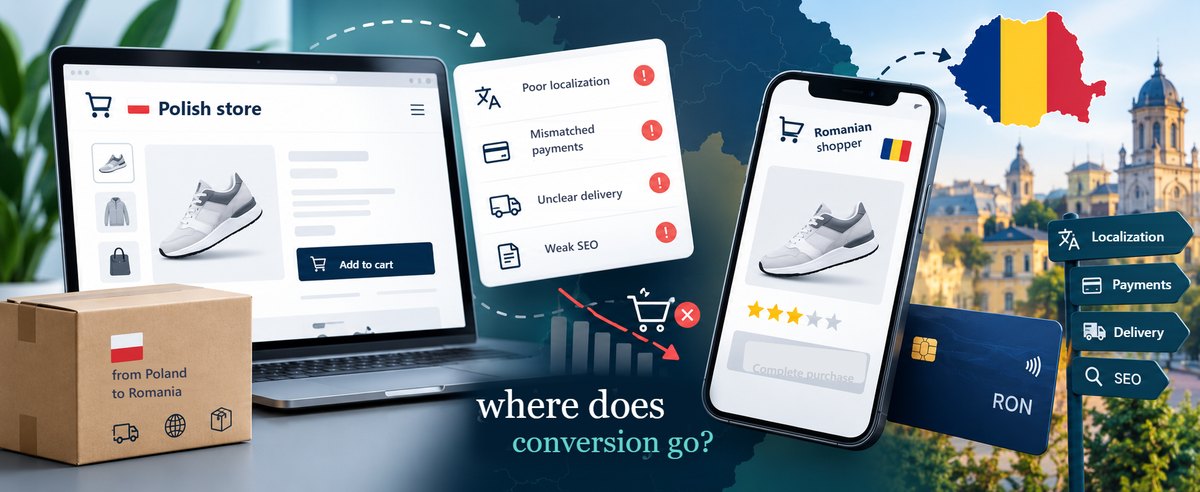
Want to sell in Romania? Don’t build your store as if it were Poland
From a Polish seller’s point of view, Romania can look fairly simple. A nearby country, a European shopper, a growing e-commerce market, so the natural reflex is: translate the store, plug in payments, launch ads and go.
That’s exactly where the most expensive mistakes begin.
Because an online store for Romania usually doesn’t fail because of a bad product. It fails because it was built like a Polish store with a Romanian translation. And that isn’t the same as locally adapted e-commerce.
Living and working in Bucharest for years, I very often see the same pattern: the Polish company is technically “ready”, but operationally, linguistically and culturally it still isn’t ready for Romanian shoppers.
Below are the mistakes I see most often.
1. You build the store for desktop, not for mobile
This is one of the most classic mistakes.
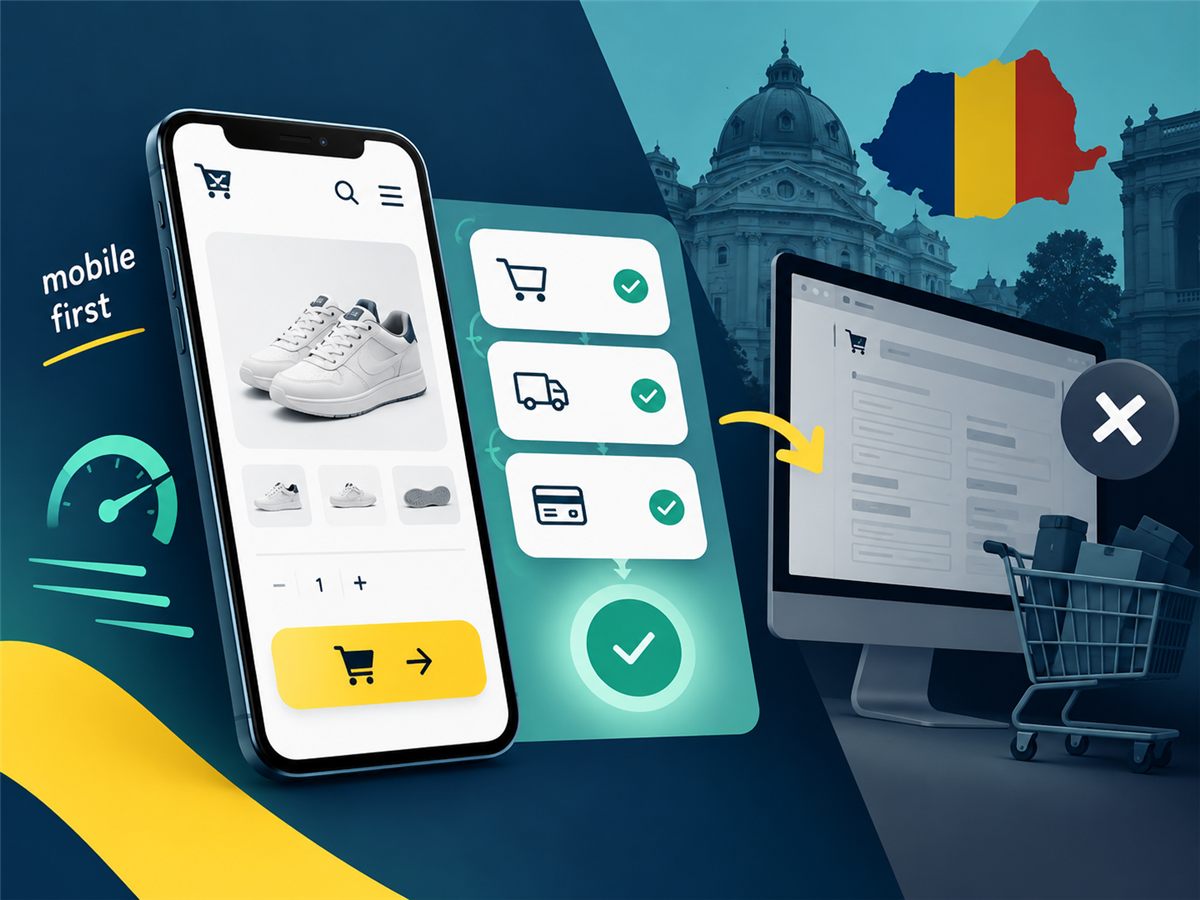
The store looks good on a laptop, the team tests it on a big screen, the presentation for management looks great too, and then it turns out real shoppers use their phones and have no desire to fight with an unadapted checkout, tiny buttons and endless scrolling.
In Romania, a very large share of traffic and orders comes from mobile devices. That should be the starting point for the whole store architecture.
What does that mean in practice?
The store should be designed mobile-first, not just responsive. That’s a huge difference.
What counts:
- speed,
- a simple cart,
- few steps,
- clear CTAs,
- clear information on delivery and payment,
- and no friction when completing the order.
If the store works only so-so on a phone, you very often can’t fix it with a campaign. You can only buy traffic more expensively that then doesn’t convert.
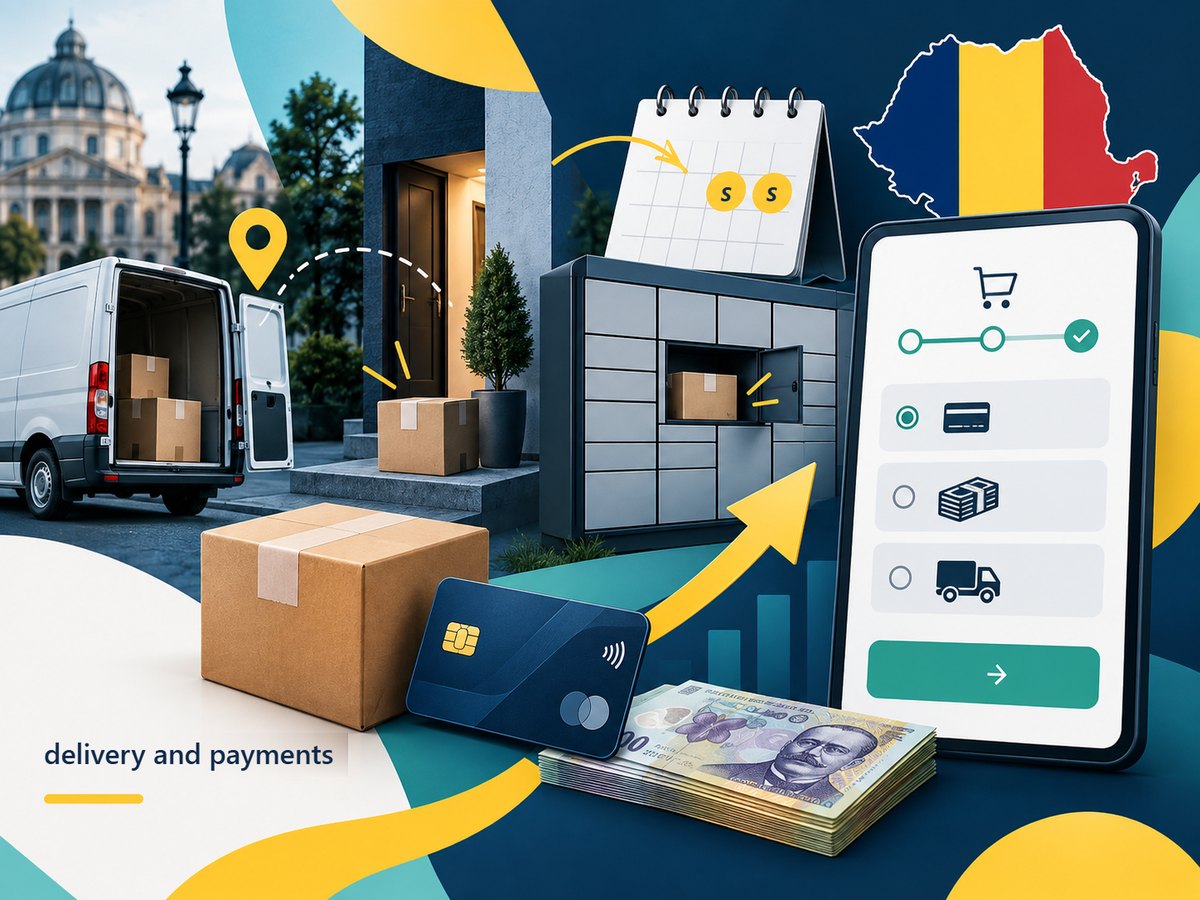
2. You ignore local delivery methods and the last mile
In Romania, logistics isn’t an add-on to sales. It’s part of sales.
Romanian shoppers are used to specific carriers and specific delivery models. Especially important are:
- home delivery,
- pickup from parcel lockers,
- PUDO solutions.
What really matters today?
The habit of using parcel lockers, and convenient pickup options beyond the classic courier in general, plays an ever bigger role. Weekend delivery can be an extra selling point too, for example with the support of carriers such as Sameday.
And this is where many Polish stores go wrong: for too long they think of delivery as back-office operations rather than part of the shopping experience.
If shoppers don’t see the delivery options that feel natural to them at checkout, they don’t think about it for long. They simply abandon the cart more often.
3. You offer payments shoppers don’t want to use
Card and cash on delivery feel natural to Romanian shoppers. Bank transfer, not necessarily.
Why?
Among other things, because bank transfers in Romania usually come with a fee. So shoppers don’t see them as a convenient, obvious way to pay online.
At the same time, Romanians have quite a lot of trust in card payments and saved cards, and their level of cybersecurity and familiarity with these solutions is good.
That matters, because some Polish sellers assume exactly the opposite.
What else is important?
It’s worth using local card payment gateways such as Netopia or EuPlătesc. That way the checkout looks more familiar to shoppers, inspires more trust and fits local shopping habits better.
The wrong payment methods can kill a checkout even with good traffic. A store can look modern, but if at the end it forces shoppers into a payment method that doesn’t feel natural to them, conversion simply drops.
4. You translate the store but don’t localize the language and SEO
This mistake often looks very innocent. Because “everything is in Romanian, isn’t it?”.
The thing is, a correct translation isn’t localization yet. And localization isn’t good local SEO yet.
What does that mean?
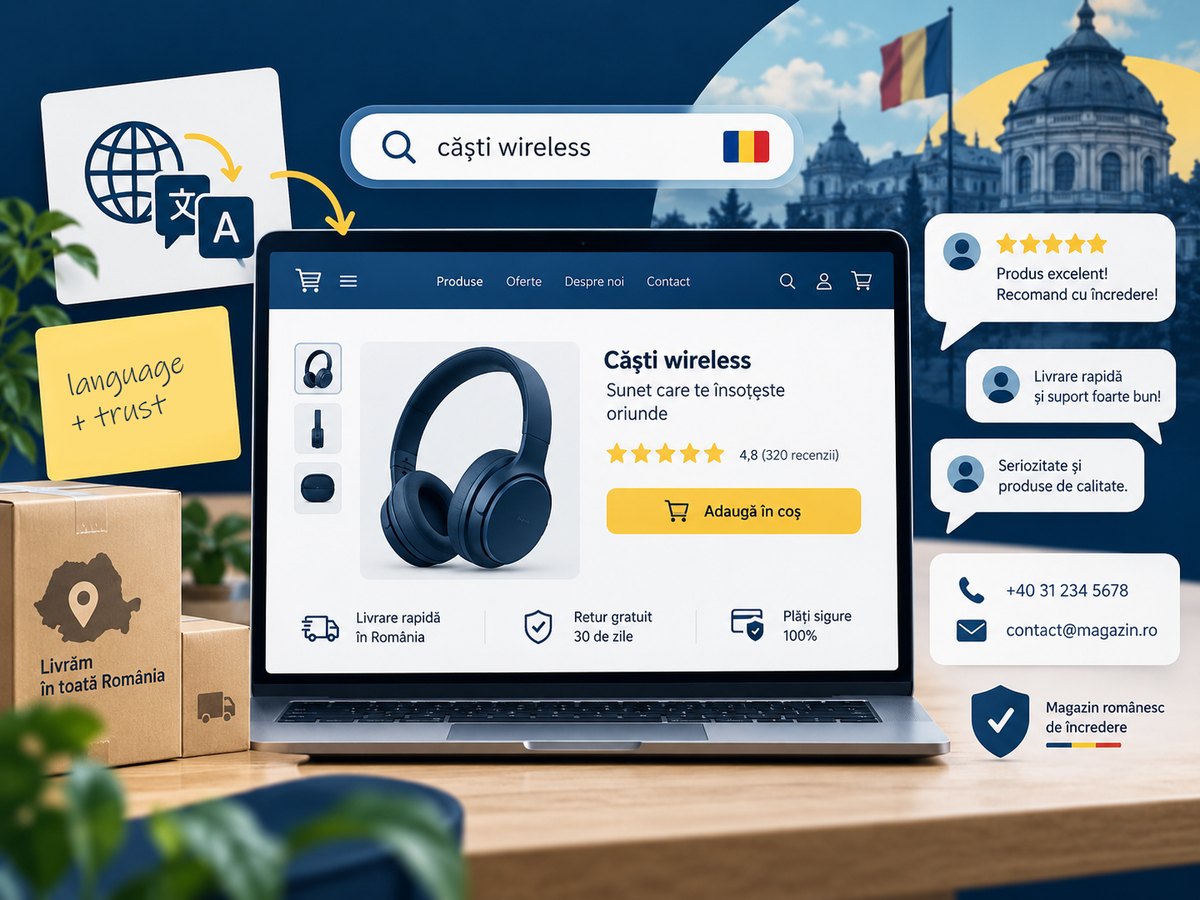
The store should sound natural in Romanian, not like a text that’s been through a lot. That applies to:
- product descriptions,
- categories,
- headings,
- CTAs,
- microcopy,
- system messages,
- the cart,
- FAQ,
- and the whole sales layer.
I won’t even start on the terms of sale, privacy policy and returns policy: how often sellers copy the exact legal provisions from Poland without adding any references to local law.
It’s also very important to take time to look at native competitors and see which phrases dominate in your category.
That’s exactly where you’ll see:
- what Romanian brands call their products,
- what local headings sound like,
- how descriptions are built,
- which words are used to sell,
- and what sounds natural to shoppers and what sounds like a translation.
Often the problem isn’t bad Romanian as such. The problem is language that’s correct but completely unnatural for selling.
And shoppers sense very quickly whether a store is really “for them” or was just translated from Polish.
Where does SEO come in?
Exactly in the same place.
The store can’t just be a copy of the Polish version with the language swapped. You need:
- local search phrases,
- local semantics,
- a local content structure,
- and content matched to how Romanian shoppers really search for products and answers.
Zero-click results, AI answers and informational sections play an ever bigger role too, and they need to be written naturally and helpfully, not just “for the bots”.
Good language localization and good local SEO are, in practice, one job: the store has to be not only in Romanian, but Romanian in the way it communicates and findable on the Romanian internet.
5. You don’t provide a local point of contact and operational trust
It matters a lot whether shoppers can see that the store really operates locally.
For shoppers, it matters whether:
- they see a local phone number (and Romanians like to talk),
- there’s a local email address,
- contact looks familiar,
- and the store doesn’t feel like a “faceless foreign entity”.
This isn’t a detail. It’s part of credibility.
In Romania, trust in a store is built not only by how the site looks, but also by signals that the company really operates locally rather than just selling “from a distance”.
6. You don’t build reviews and trust
Romanian shoppers really do look at reviews, ratings and credibility signals. But it’s worth going a step further and understanding how they read them.
These shoppers are much more focused on emotions than on numbers. Romanians very often use the language of emotion, and in reviews they don’t stop at a simple “recommend / don’t recommend”. They describe situations, experiences and the whole context of the purchase.
That means it’s not just the star rating that matters, but also the story behind the review:
- how the delivery went,
- what contact was like,
- whether the product met expectations,
- how the person felt about it.
What follows from this?
Reviews in your store should be:
- visible,
- credible,
- as detailed as possible,
- and well placed next to the product.
To start with, you can use reviews translated from your Polish store, but in the long run you need to think carefully about a strategy for collecting and publishing them locally.
Because they don’t just confirm the quality of the offer. They build emotional safety before the purchase.
And if that safety is missing, shoppers more often go back to the marketplace or choose a store that simply looks more “proven”.
7. You don’t understand the local shopping culture
This is exactly where many implementations that were “technically well done” fall apart.
Romania isn’t a copy of Poland. Expectations differ regarding:
- communication,
- promotions,
- the path to purchase,
- ways of getting in touch,
- the brand’s tone,
- and the way decisions are made.
A very good example? The shopping cart.
Unlike Polish shoppers, Romanians usually prefer a shorter, trimmed-down choice of delivery. No excess of options, no five screens of decisions and no feeling that you have to compare everything from scratch.
Very often a simple choice is enough:
- home delivery,
- parcel locker.
Plus, ideally, just 1, or at most 2, of the most popular local couriers, rather than showing shoppers a long list of carriers.
This is a very important difference. In Poland, a broad choice is often seen as an advantage. In Romania, an overly elaborate checkout more often just adds friction.
It’s a good example of how localizing a store doesn’t end with language. It starts where you simplify the decision exactly the way local shoppers expect.
A store can be technically correct and still not sell
This is probably the most important takeaway of the whole topic.
Because most of these mistakes don’t come from a lack of budget. Nor do they come from the company “not wanting to do it right”. Most often they come from copying the Polish model 1:1.
And a store well prepared for Romania isn’t a translated Polish store. It’s a store that is:
- linguistically adapted to the local market,
- rooted in Romanian shopping habits,
- logically built for mobile,
- backed by local logistics,
- equipped with the right payment methods,
- and has a checkout that doesn’t make shoppers think too hard.
If a store isn’t selling, the problem very often isn’t traffic. The problem is the foundations.
Planning an online store for Romania or want to improve one that’s already running? At Expand Wise I help companies analyze their entry model and build a store adapted to Romanian shoppers, not just translated from Polish.
Check your products’ potential
We’ll assess whether your products can succeed in Romania or Poland: demand, competition, prices, and delivery and return costs. We’ll also suggest which channel to start with.