
Think Romania ends at eMAG? Part 2: Compari, Pepita, Skroutz, OLX and Vivre
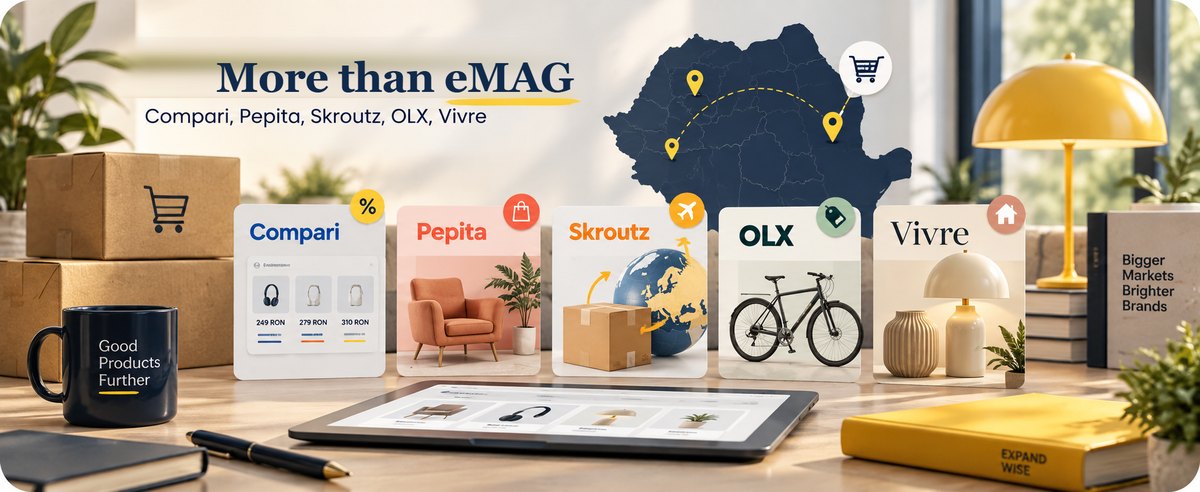
If, after part one, you already have eMAG, Altex, Trendyol, Fashion Days, Temu and Decathlon on your radar, it’s time to go a step further. Because selling online in Romania doesn’t stop at the biggest platforms. There are also channels that support visibility, close the sale or open access to a different kind of shopper.
In part one I wrote about the marketplaces that usually come up first when planning an entry into Romania: eMAG, Altex, Trendyol, Fashion Days, Temu and Decathlon.
And rightly so, because those channels really are worth starting with.
But once you’re past the first stage of thinking about the market, the second, much more interesting part of the puzzle begins. Because sales in Romania aren’t made only on the biggest names. Sometimes a really good result only comes from a well-chosen mix of channels: some build scale, others help close the sale, and others suit a specific category better than a general platform.
Today I’m looking at:
- Compari
- Pepita
- Skroutz
- OLX
- Vivre
Each of these channels works differently. That’s exactly why it’s worth knowing what each one is best for.
The further you go from the obvious marketplaces, the more the question shifts from “where can I get in?” to “where does this product really make sense?”.
Compari: where shoppers really compare
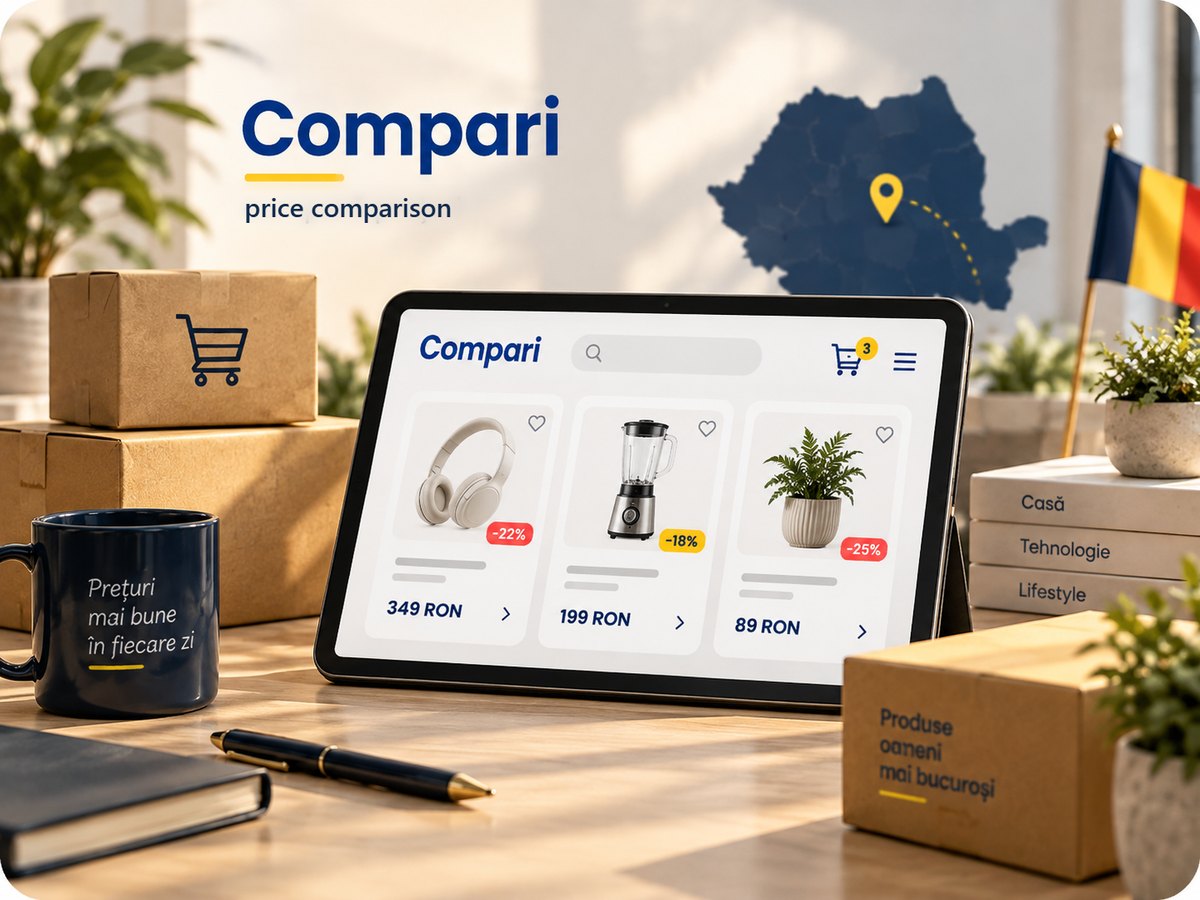
Compari may not stir up the same excitement as the big marketplaces, but that doesn’t mean it should be treated as an afterthought.
Quite the opposite.
It’s a channel firmly rooted in Romanian shopping culture as a price comparison site. Users know the brand, understand its role and come back to it when they want to check an offer before buying. Interestingly, Romania is where Heureka Group first decided to add a “buy now” button, which shows how mature the operator considers this market.
The scale is real too: according to Similarweb, Compari recorded over 3.5 million visits in March 2026 alone.
This is no longer just a place to “glance at prices”. It’s a very real touchpoint with shoppers who are close to a buying decision.
Which categories?
Compari works especially well where shoppers want to compare:
- electronics,
- small appliances,
- accessories,
- home and garden,
- products with clear specs,
- offers where price and the listing matter a lot.
How to look at it
Compari doesn’t replace a classic marketplace, but it strongly supports the consideration stage. If you have a competitive price, a good feed and a product shoppers compare “with a cool head”, this channel can work very well at the bottom of the funnel.
It’s a place for sellers who understand that not every channel has to run on inspiration. Sometimes it’s enough to help the shopper buy sensibly.
Pepita, Skroutz and OLX: different roles, different uses
These three channels should be looked at quite differently from Compari. They don’t play the same role or meet the same brand needs. But that’s exactly why they complement a broader Romanian market-entry strategy well.
Pepita: a good channel for everyday products and broad retail
Pepita is worth considering where the product is practical, easy to understand without much explanation and fits naturally into a broad, everyday shopping basket.
It’s a channel that can round out your sales mix, especially if you already have content in Romanian and want to use it on more than one platform.
Which categories?
The ones that usually make sense here:
- home,
- accessories,
- kids,
- lifestyle,
- some beauty,
- small electronics,
- everyday products.
What matters?
Pepita works well for brands that:
- have a broad range,
- can work with a good feed,
- don’t need very elaborate product storytelling,
- want to widen their sales reach without building everything from scratch.
It’s one of those channels where the advantage of work already done for eMAG is easy to see. If you have titles, descriptions, specs and photos in Romanian, it’s much easier to reuse the same assets here.
Skroutz: a good reference point for companies thinking regionally
Skroutz isn’t the platform you build a classic Romanian market entry on. But if you look at the region more broadly, it’s worth having in mind early, not only when you need to go beyond one country. It’s a good opening to the rest of the Balkans and a way into Greece.
It matters more in a regional logic than a strictly Romanian one. That’s why it suits companies that don’t want to build expansion as a series of separate, random projects but think about it more systematically.
Which categories?
The ones that usually make the most sense:
- electronics,
- home,
- accessories,
- some lifestyle,
- products that are easy to compare on offer.
How to treat it
Not as a first choice for most foreign sellers in Romania, but rather as a channel that can come into play when a company starts looking more broadly at the Balkans and South-Eastern Europe.
It’s more a piece of expansion architecture than a quick sales win.
OLX: practical, useful and often underestimated
OLX doesn’t fit the elegant picture of “marketplace expansion”. It doesn’t sound premium, it doesn’t sound corporate and it doesn’t look great on a slide.
But slides don’t buy products.
OLX can be useful where what counts is:
- simple contact with the customer,
- quick visibility for a listing,
- the local nature of some sales,
- testing product groups,
- or categories that don’t need an elaborate brand story.
When does it make sense?
Most often:
- for more practical, utility offers,
- for products being tested locally,
- for price-sensitive categories,
- where practicality and availability matter more than a “brand world”.
How to look at it
Not as a replacement for eMAG or Altex, but as a tool for a different kind of job. Some brands won’t need OLX at all. For others it can become a good complementary channel, especially where reaching shoppers quickly or testing the market’s reaction matters.
The biggest mistake is to judge it only by the fact that it doesn’t look like a classic marketplace.
Not every channel is there to build prestige. Some channels simply have to work operationally and sell.
Vivre: a channel worth knowing how to assess in home & deco
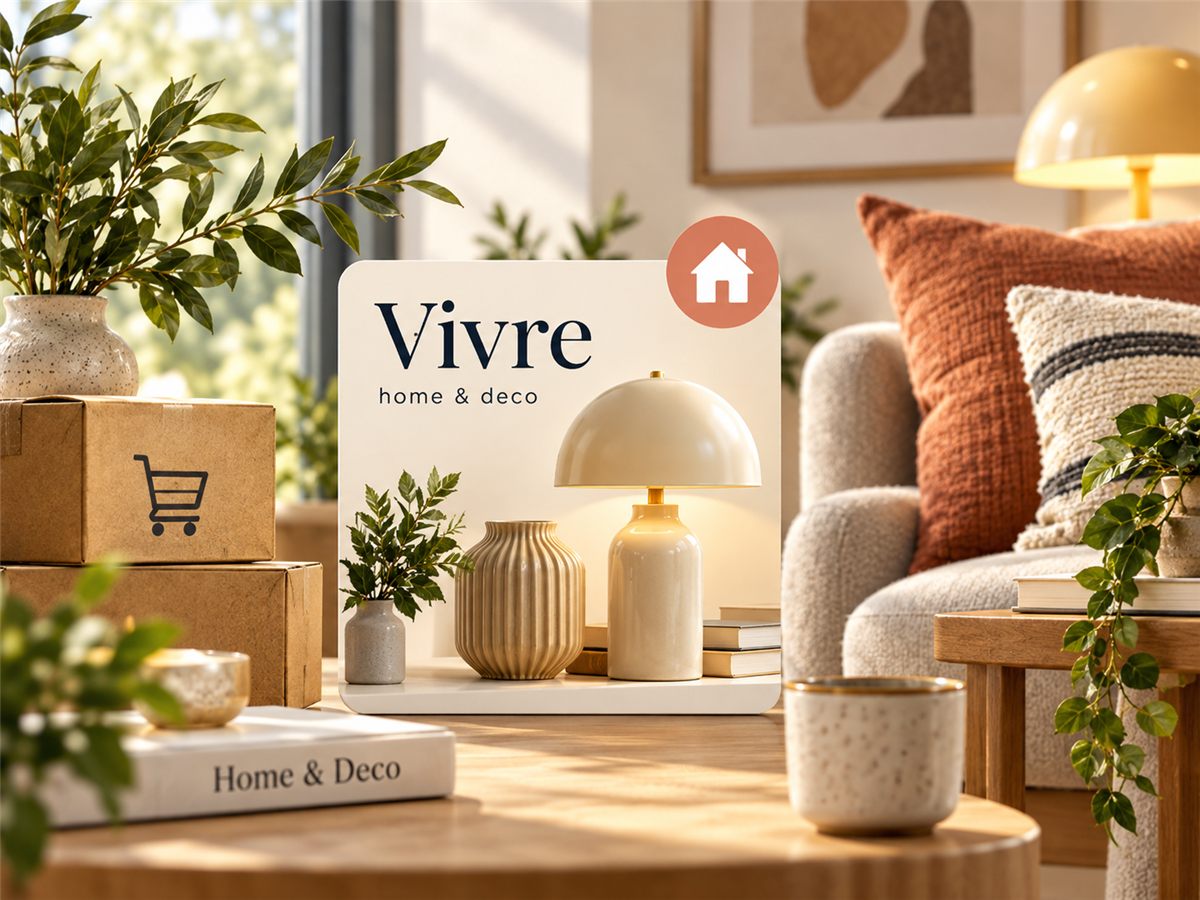
Vivre isn’t a topic worth reducing to simple labels. Neither “it used to be big” nor “who knows now” helps much.
If you’re in home & deco, it’s much more useful to look at the platform in terms of how well your category fits today and how offers are presented. But to assess it well, it also helps to know where it came from.
Vivre started about 14 years ago as a shopping club focused on home, deco and lifestyle. That’s the DNA the brand grew from: not electronics, not a general marketplace, but the aesthetic world of interiors. Over time the company expanded beyond Romania and launched 9 platforms in total, stretching from Poland in the north to Greece in the south.
Later a marketplace option was added to the model, and over time, partly due to management turbulence and a few unfortunate decisions, Vivre turned almost completely into a marketplace platform.
And this matters: the model changed, but customer perception didn’t change as much. Users still associate Vivre mainly with its core categories: home, deco and lifestyle. That’s why the platform can still make sense for brands that fit that context well.
Which categories?
Most naturally:
- home & deco,
- furniture,
- lighting,
- interior accessories,
- outdoor,
- home-related lifestyle.
When does it make sense?
When:
- you have an attractive product,
- you know how to present it well,
- you want a better visual context,
- you don’t want to base all your interior sales on a general platform.
With Vivre, selection matters a lot. It isn’t about uploading the whole catalog, but choosing the offer that really fits the world of interiors. A well-chosen product can look much better here than on a broad marketplace, where next to a lamp the shopper sees a bird feeder, a car phone holder and a blender.
A practical tip
If you sell home products, assess Vivre not just by the company’s history but by:
- how well your category fits,
- the context for your product,
- the strength of your images,
- and whether your offer really fits the platform’s aesthetic.
What do all these channels have in common?
Compari, Pepita, Skroutz, OLX and Vivre aren’t alike. And that’s exactly their biggest strategic advantage.
They show that the Romanian market doesn’t end with the most obvious names. And once the “let’s just get on eMAG” stage is over, much better questions begin:
- where does my category have better context?
- where is it worth picking up extra volume?
- where do shoppers compare, and where do they buy on impulse?
- where does the brand look better?
- which channel actually makes sense operationally?
And only then does the real marketplace work begin.
It isn’t about being everywhere
It’s worth saying plainly: more channels don’t automatically mean a better strategy.
The goal isn’t to be everywhere, but to be where:
- the product fits the platform,
- the logistics add up,
- the margin makes sense,
- the team can handle it without chaos,
- and the channel really adds something to the sales mix.
Not everyone will need Compari.
Not everyone should invest time in OLX.
Not everyone will find their place on Vivre.
But it’s very good to know these options exist and that, for some categories, they can do exactly what a general channel won’t.
And that’s still not the whole Romanian marketplace scene
One more important thing: this still doesn’t cover the entire marketplace scene in Romania.
There are other platforms on the market too, such as Infinity and OnBuy. For now, though, that’s still too little to give them full, separate sections in this article. They’re worth keeping on your radar, but today they aren’t the channels I would start a strategic conversation with for most foreign sellers.
A good expansion plan isn’t about collecting marketplaces.
It’s about choosing channels that really fit the product, the operating model and the sales goal.
Summary
If, after part one, you already have eMAG, Altex, Trendyol, Fashion Days, Temu and Decathlon on your radar, great. They’re still the most important starting points.
But if you want to enter Romania in a more mature, broader way, it’s worth looking at channels that play other roles too:
- Compari helps where shoppers compare prices and specs,
- Pepita supports broad retail and everyday products,
- Skroutz brings a regional perspective,
- OLX offers a practical tool for some utility categories,
- Vivre can be a good environment for home & deco.
Because, as usual in e-commerce, the winner isn’t whoever is everywhere.
The winner is whoever is where their product really makes sense.

Check your products’ potential
We’ll assess whether your products can succeed in Romania or Poland: demand, competition, prices, and delivery and return costs. We’ll also suggest which channel to start with.